On construction sites, temporary working areas and infrastructure projects, correct installation of guardrail systems is very important for ensuring safety. Standard installation methods are not sufficient, particularly for applications on soil, fill or loose ground. It is therefore essential to use the right equipment and to apply all installation stages fully in order to achieve a solid installation on soft ground. In this process, using ground support plates helps guardrail systems be fixed safely and evenly.
Soft ground can compact or loosen over time due to heavy rainfall, ground movement or natural use. This directly affects the stability of guardrail systems to a significant degree. Even small movements that may occur on construction sites in particular can cause posts to bend or connection points to loosen over time.
When installing on soft ground, it is essential that the load is distributed over a much wider area. This reduces the pressure applied to the ground and makes the system safer. Guardrail systems that are not properly supported can put both the order of the working area and worker safety at risk.
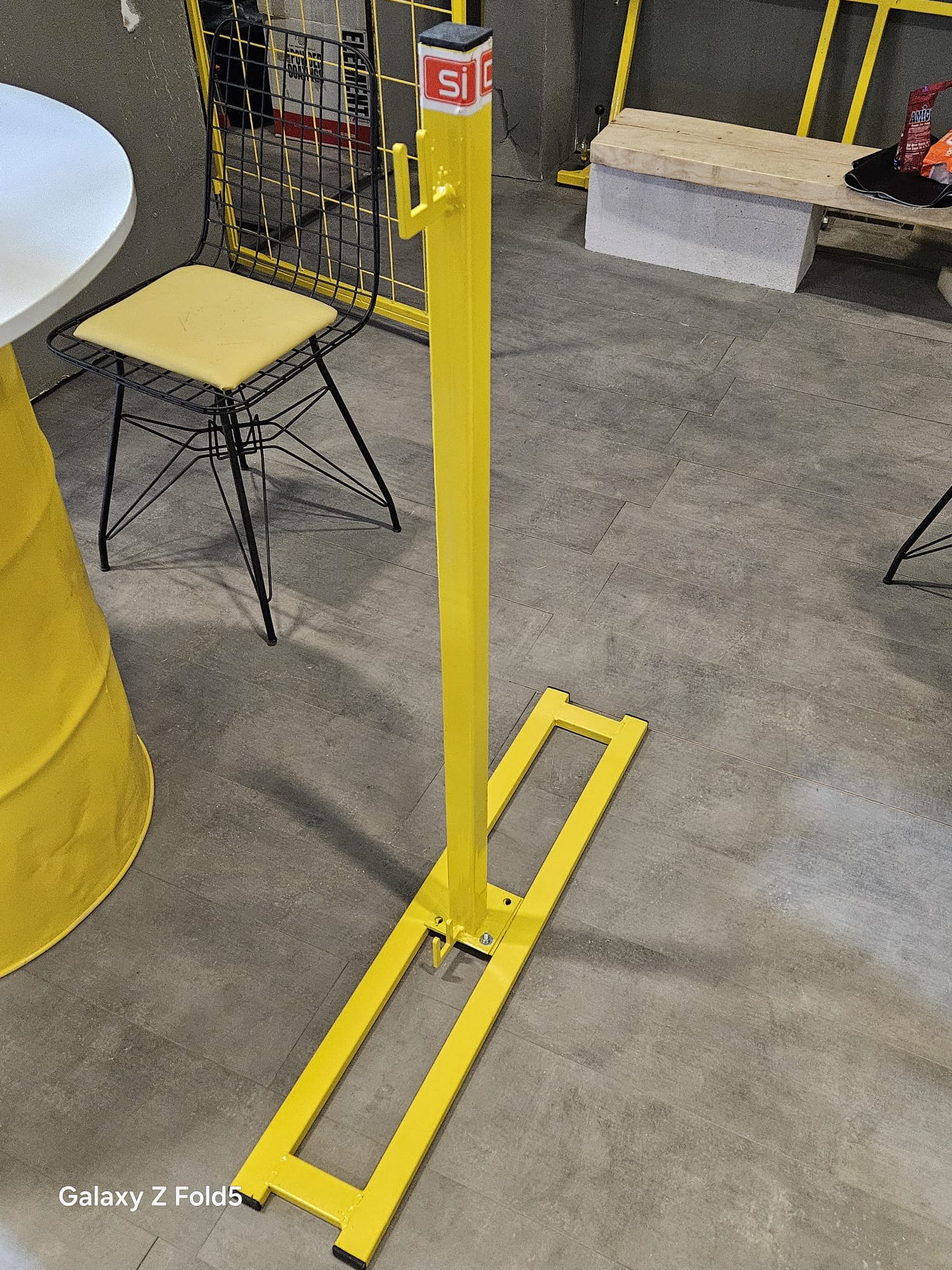
Soft ground support plates spread the load coming from the posts over a wider surface, reducing the pressure applied to the ground. This helps prevent the posts from sinking into the soil, bending or loosening over time. Using ground support plates provides particular advantages in the following:
A correctly chosen post support plate helps the guardrail system stand more evenly, increasing its long-term performance. It can also be said to help maintenance and inspection processes run more efficiently.
The choice of systems to be used on soft ground must be determined according to safety requirements and the structural characteristics of the working area. Here:
Temporary Edge Protection Systems
Temporary edge protection systems are used to take worker safety to the highest level in areas where there is a risk of falling throughout the construction process. When installed together with the right support plates, they can also be applied safely on soft ground.
Construction Guardrail Systems
Construction guardrail systems are one of the most widely used pieces of safety equipment on construction sites. In applications on soil ground, the system becomes more robust thanks to suitable support plates and installation safety is taken to the highest level.
Stair Railings
It is very important that railings used in temporary stair areas are fixed securely. On outdoor staircases in particular, the load-bearing capacity of the ground must be taken into account and additional strength provided with support plates where necessary.
Post, Stanchion and Upright Systems
Post, stanchion and upright systems form the load-bearing components of guardrails. Fixing these parts to the ground correctly directly affects the overall performance of the system. Choosing support plates when fixing guardrails to the ground helps connection points work more evenly.
For a successful solid installation on soft ground, the entire installation process must proceed according to plan. The following steps should be followed for a solid installation on soft ground:
Choosing the right product alone is not enough for safe use on soft ground. Regular checks must also be carried out after installation. The main points to consider can be listed as follows:
These practices help the system be used safely over a long period.
Choosing the right equipment is of great importance for safe guardrail installation on soft ground. The ground support plate solutions among Dekosi's product options provide reliable installation support for construction guardrail systems, temporary edge protection systems and post, stanchion and upright applications. Developed to suit different site requirements, these products improve load distribution and help systems work more stably. Using the right ground support plate is one of the most fundamental steps towards a safe and long-lasting installation.
They can be said to be used on most soil and fill ground. However, the appropriate plate must be chosen by evaluating the load-bearing capacity of the ground and site conditions.
The structure of the ground can change due to rainfall, ground compaction, vibration or constant load changes. This can cause posts that are not sufficiently supported to loosen over time.
Yes. Because the structure of the ground can change after heavy rainfall, the posts, connections and support plates must be checked again.
Support plates that have not deformed or been damaged can be reused on different projects after appropriate maintenance and checks. However, the physical condition of the products must always be examined in detail before use.